
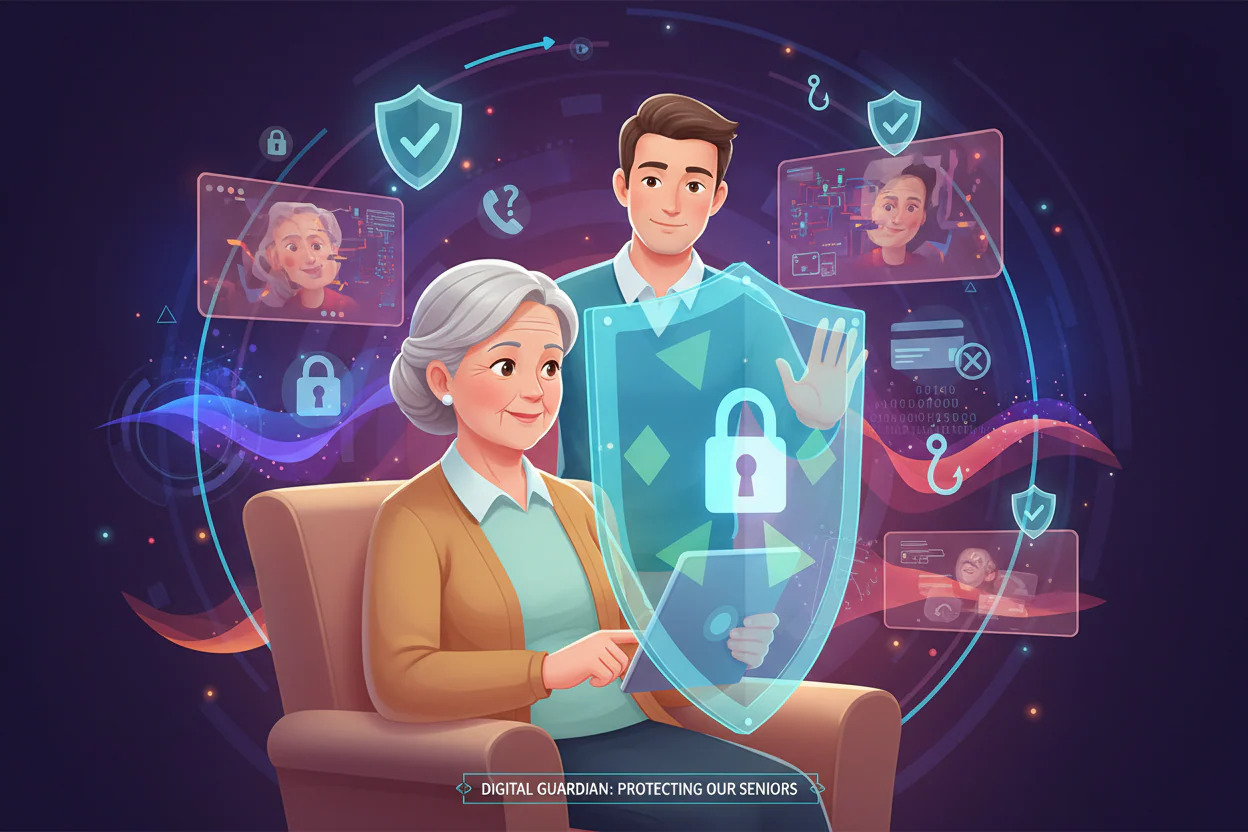
Imagine getting a call from your mom. Her voice is shaky. She sounds terrified. She says she needs help—right now.
Your stomach drops. You don’t question it. You react.
But what if it’s not her?
That’s the unsettling reality behind Deepfakes y llamadas con IA: nuevas estafas, a new wave of scams that are far more convincing—and far more dangerous—than anything we’ve seen before.
When Technology Crosses a Line
We’ve all heard about artificial intelligence doing incredible things—writing content, generating images, even helping businesses run more efficiently. But like any powerful tool, it comes with a darker side.
Deepfakes are AI-generated audio or video clips that can mimic real people with shocking precision. Not just their appearance, but their voice, tone, and way of speaking.
Now combine that with real-time communication, and you get something even more dangerous.
This is exactly why Deepfakes y llamadas con IA: nuevas estafas are becoming such a serious concern—they blur the line between real and fake in a way we’ve never experienced before.
Why These Scams Feel So Real
People don’t fall for these scams because they’re naive. They fall for them because they’re designed to feel real.
Emotion Takes Over
Most scam calls create urgency:
- “I’ve been in an accident.”
- “I’m in trouble.”
- “I need money immediately.”
In those moments, your brain doesn’t analyze—it reacts.
Familiar Voices Lower Your Guard
Hearing someone you trust instantly makes the situation believable. And with AI, recreating that voice is easier than ever.
Even a short clip from social media can be enough.
Technology Is Widely Available
You no longer need advanced skills to create convincing deepfakes. The tools are becoming mainstream, which is exactly why Deepfakes y llamadas con IA: nuevas estafas are spreading so quickly.
Real Stories That Don’t Feel Real
These scams are already affecting real people—and the stories are unsettling.
A parent receives a call from their “child,” crying and saying they’ve been kidnapped. The voice is emotional, convincing, and urgent. Money is demanded immediately.
In another case, an employee gets a call from their “boss” asking for an urgent transfer. Everything checks out—the tone, the urgency, the authority.
Except none of it is real.
This is the scary part about Deepfakes y llamadas con IA: nuevas estafas—they don’t look like scams anymore. They feel like reality.
Where Do Scammers Get Your Voice?
You might be wondering how this is even possible.
The answer is simple: the internet.
Social Media Content
Videos, stories, voice notes—these are all potential sources.
Public Platforms
Podcasts, YouTube videos, interviews—anything with your voice can be used.
Data Breaches
Personal information helps scammers build believable scenarios around the voice they’ve cloned.
You don’t need to be famous to be targeted. You just need to exist online.
Subtle Red Flags You Should Watch For
Even the most advanced scams have cracks.
Urgency Is a Strategy
If someone pressures you to act immediately, pause.
Strange Payment Requests
Gift cards, crypto, or wire transfers are common scam tactics.
Slightly Off Conversations
Sometimes the tone or responses may feel just a bit unnatural.
Avoiding Verification
If they refuse a callback or another form of confirmation, that’s a big warning sign.
How to Protect Yourself
You don’t need to live in fear—but you do need to stay aware.
Set a Family Code Word
Have a simple phrase only your close circle knows. It can instantly verify identity in emergencies.
Always Double-Check
Hang up and call the person directly using their real number.
Be Careful What You Share
You don’t have to disappear from social media—just be mindful of how much voice content you post.
Pause Before Reacting
Scammers rely on panic. The moment you slow down, you take back control.
Spread Awareness
Many people still don’t know about Deepfakes y llamadas con IA: nuevas estafas. Talking about it can protect others.
The Future of Scams Is Already Here
AI is evolving rapidly. That means scams will become even more sophisticated—real-time voice cloning, video deepfakes, and highly personalized attacks.
It’s a bit unsettling to think about.
But awareness is growing too.
The more we understand Deepfakes y llamadas con IA: nuevas estafas, the less power scammers have over us.
Final Thoughts: Trust Your Instincts, Not Just Your Ears
There was a time when hearing someone’s voice was enough to trust them.
That time is gone.
Today, voices can be copied. Identities can be faked. And urgency can be manufactured.
So the next time you get a call that feels intense or unusual, don’t rush.
Pause. Think. Verify.
Because in a world shaped by Deepfakes y llamadas con IA: nuevas estafas, your best defense isn’t speed—it’s awareness.